
Why Gilbert Dentists Lose New Patients to Profiles with Fewer Stars
Why Gilbert Dentists Lose New Patients to Profiles with Fewer Stars
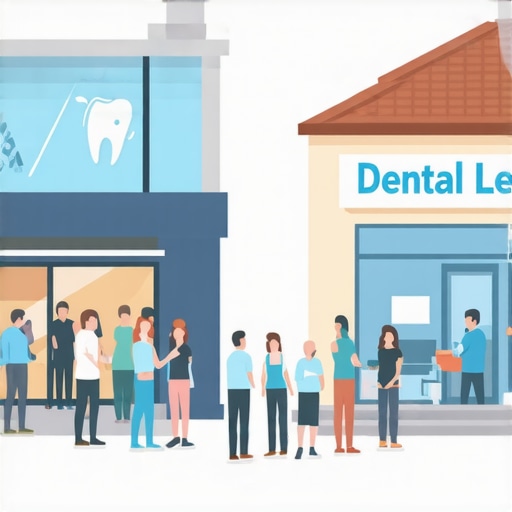
Imagine a dental practice in the heart of the Gilbert Heritage District. This practice has spent a decade building a pristine reputation, boasting over 500 five-star reviews. The staff is friendly, the office is modern, and the patient satisfaction scores are off the charts. Yet, when a potential patient standing near the intersection of Gilbert and Elliot Roads searches for a dentist near me, this 5-star practice is nowhere to be found in the top three results of the Google Map Pack. Instead, the top spots are occupied by a competitor with a 4.2-star rating and a mere 50 reviews. This frustrating phenomenon is what we call the Star Trap.
For years, the conventional wisdom in local seo for dentists was simple: get more reviews, and you will rank higher. However, as we navigate the complexities of the 2026 Google Maps algorithm, that advice has become dangerously incomplete. While reviews are a critical component of consumer trust, research from Ward Dental Lab suggests that reviews account for less than 10% of the total local ranking weight. If you are relying solely on your star rating to drive patient acquisition, you are likely overlooking the technical proximity, relevance, and prominence signals that allow lower-rated competitors to steal your leads. In a town like Gilbert, which has exploded to over 275,000 residents according to recent Digitaleer data, the competition for the Map Pack is a high-stakes game where technical google business profile seo often trumps a perfect reputation.
The Proximity Paradox: Why Near Me Beats Best Rated
The most significant hurdle for any Gilbert dental practice is the proximity filter. In the current 2026 Local SEO Trends report, proximity to the searcher remains the number one ranking factor in the Google Maps algorithm. This creates what we call the Proximity Paradox: a patient will often be shown a closer, lower-rated dentist over a superior, higher-rated dentist located just a few miles further away. Google’s primary objective is to provide the most convenient solution for the user, and in the eyes of the algorithm, convenience is measured in meters, not stars.
Consider a resident in the Morrison Ranch neighborhood. If they perform a search for a dentist while sitting in their living room, Google’s AI-powered search will prioritize practices within a tight radius of that specific location. Even if your practice in Val Vista Lakes has a higher rating, the “invisible wall” of proximity might exclude you from the Map Pack for that specific searcher. This is why you see local rivals with fewer reviews still win the Gilbert map pack; they simply happen to be physically closer to the clusters of search volume at that specific moment.
To combat this, a practice must engage in aggressive google business profile optimization. You cannot move your building, but you can expand your digital “proximity footprint.” This involves creating hyper-local content that signals to Google that your relevance extends beyond your immediate street address. Without a strategy to increase google business profile visibility through localized signals, your 5-star rating will continue to be sidelined by the geography of the searcher. To rank google business profile results effectively, you must understand that the Map Pack is not a city-wide leaderboard; it is a hyper-local, real-time response to a user’s specific coordinates.
Relevance vs. Rating: How Category Dilution Kills Your Rank
Another reason highly-rated Gilbert dentists lose out to competitors is category dilution. Many practices set their primary category to “Dentist” and leave it at that. However, Google Maps ranking factors are heavily weighted toward specific relevance. If a parent in Power Ranch searches for a pediatric dentist, Google will prioritize a profile categorized specifically as a “Pediatric Dentist,” even if that profile has a 4.0-star rating, over a 5.0-star general “Dentist” profile.
This is where specialized google business profile seo becomes essential. If your practice offers Invisalign, dental implants, or emergency services, those keywords must be reflected in your secondary categories and your service descriptions. A common mistake is trying to be everything to everyone without telling the algorithm exactly what you specialize in. A competitor who has focused their optimization on “Emergency Dental Services” will consistently outrank a general dentist for those high-intent, high-value searches, regardless of their star count.
Properly managing these categories requires sophisticated tools and a deep understanding of how Google’s Knowledge Graph connects dental services to user intent. Utilizing a professional google business profile seo service or specialized local seo tools can help identify which categories your competitors are using to bypass your higher ratings. By aligning your profile with specific patient needs, you ensure that you are relevant for the searches that actually convert into appointments, rather than just being a highly-rated generalist who is invisible when it matters most.
The Recency Bias: Why Your 2022 Reviews Are Losing to 2026 Content
The 2026 Core Shift in Google’s algorithm has placed an unprecedented emphasis on “freshness.” The algorithm now displays a clear recency bias, meaning that ten reviews received in the last 30 days carry significantly more weight than 100 reviews from two years ago. If your 5-star rating was built on a massive push from 2022 but your recent review velocity has slowed, Google may view your practice as less “active” or “relevant” than a newer clinic that is generating fresh patient feedback every week.
This shift is part of Google’s effort to ensure that the businesses it recommends are currently providing excellent service. A practice that was great three years ago might have changed ownership, lost key staff, or let their facilities decline. Therefore, the algorithm looks for continuous, recent engagement. This is a core part of a modern google review strategy. It is no longer enough to reach a certain number of reviews and stop; you must maintain a consistent “heartbeat” of new content. Stop losing Gilbert leads to maps competitors with these 3 profile fixes, starting with a strategy for consistent, ongoing review generation.
Furthermore, the content of the reviews now matters as much as the rating itself. Google’s AI analyzes the text of recent reviews to find keywords that match the user’s search. If a recent review mentions “painless tooth extraction in Gilbert,” that practice is more likely to rank for that specific search term than a practice with a higher overall rating that hasn’t had a review mention “extraction” in months. This level of detail is why a comprehensive google maps ranking service focuses on the quality and frequency of patient engagement rather than just the raw star count.
Technical “Invisible” Signals: Schema, NAP, and Metadata
While stars are visible to patients, there is a world of “invisible” signals that dictate who actually makes it into the Map Pack. These technical factors are often the reason why a lower-rated dentist is outperforming a local favorite. One of the most overlooked elements is local schema markup. This is a specific type of code on your website that tells Google exactly where you are, what you do, and what your business hours are. Without correct schema, Google has to “guess” at your data, and the algorithm rarely rewards guesswork with a top spot.
Another critical factor is NAP consistency (Name, Address, Phone number). If your practice is listed as “Gilbert Family Dental” on your website but “Gilbert Dental Group” on your Google Business Profile and “Gilbert Family Dentistry” on Yelp, the algorithm becomes confused. This lack of consistency erodes Google’s trust in your business’s legitimacy. In the world of Arizona SEO: Why Proximity Signals Now Outweigh Reviews in 2026, trust and authority are built through technical precision. A practice with a 4.2-star rating and perfect NAP consistency across 100 local directories will often outrank a 5.0-star practice with messy data.
Additionally, google business profile backlinks – links from local Gilbert organizations, news sites, and dental blogs – act as votes of confidence for your profile’s prominence. If your competitor is mentioned in the Gilbert Sun News or has links from the Gilbert Chamber of Commerce, their “prominence” score will skyrocket. This technical authority allows them to rank higher on google maps even if their patient reviews are slightly lower. These invisible signals are the foundation of any successful google maps lead generation strategy.
The 2026 Video Verification and AI Shift
As we move further into 2026, Google has introduced new layers of verification and AI-driven analysis that have fundamentally changed the Map Pack landscape. One of the most significant changes for Gilbert dentists is the requirement for video verification. Google now often requires business owners to provide video proof of their office, their signage, and their staff to ensure the business is a legitimate local entity. Practices that have successfully completed this verification and regularly post video updates to their profile are seeing a significant boost in visibility.
Google’s Search Generative Experience (SGE) also plays a massive role now. AI doesn’t just look at stars; it looks for “social proof” in the form of photos, videos, and detailed descriptions. If your profile is a “ghost town” of old photos, the AI will favor a competitor who regularly uploads high-quality images of their waiting room, their technology, and their team. This engagement signals that the practice is active and modern. How to reclaim your google maps Gilbert spot after 2026 updates often involves a shift toward this more dynamic, media-rich approach to profile management.
The AI also cross-references your profile with other mentions across the web. It looks for “unlinked mentions” – instances where people are talking about your Gilbert dental practice on social media or local forums – even if they don’t link back to you. This broad web of digital signals creates a profile of “prominence” that the algorithm uses to rank businesses. If your competitor is more “talked about” in the local community, their lower star rating won’t stop them from taking the top spot in the Map Pack.
Conclusion: Reclaiming Your Spot in the Gilbert Map Pack
The “Star Trap” is a frustrating reality for many elite Gilbert dentists, but it is not an insurmountable one. Understanding that star ratings are primarily a “click-through” factor – meant to convince a patient to click once they see you – while proximity, relevance, and technical prominence are the “ranking” factors that get you seen in the first place, is the first step toward dominance. You can have the best reputation in Arizona, but if your technical google business profile seo is lacking, you will remain invisible to the thousands of patients searching for your services every month.
To win in 2026, you must look beyond the stars. You need a strategy that addresses the proximity paradox, optimizes for specific service categories, maintains a high review velocity, and solidifies your technical foundation with schema and NAP consistency. Whether you choose to perform a detailed google business profile audit yourself or hire a google maps ranking expert, the goal remains the same: align your practice with the complex, multi-faceted signals that Google’s algorithm actually cares about. By doing so, you can break out of the Star Trap, outshine your lower-rated competitors, and ensure that your practice remains the first choice for the growing community of Gilbert.