The Real Reason Your Shop’s Map Pin Moves Every Time Google Updates
The Real Reason Your Shop’s Map Pin Moves Every Time Google Updates
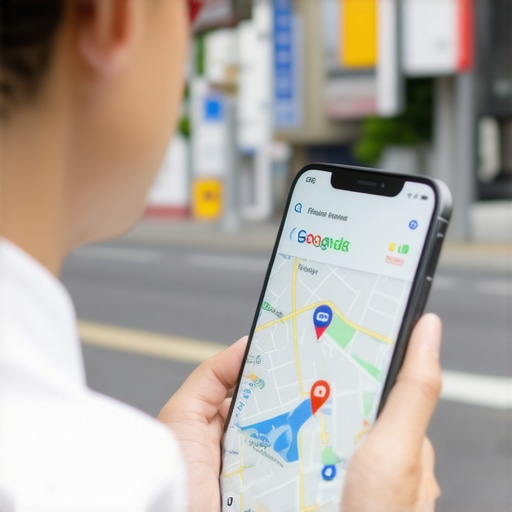
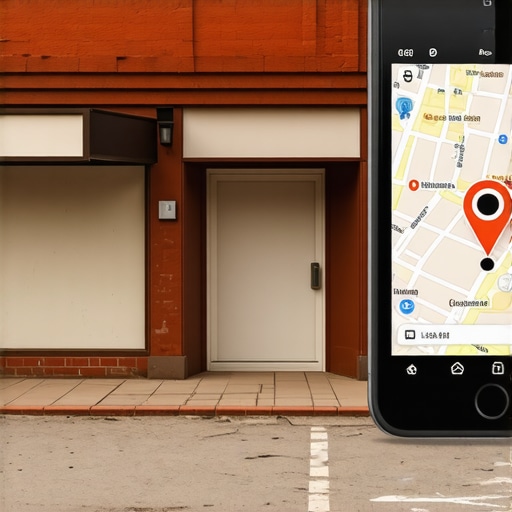
For many small business owners in Gilbert, Arizona, the Google Map pin is the lifeblood of their digital storefront. You spend months building reviews, optimizing your descriptions, and ensuring your photos look professional. Then, a Google algorithm update rolls out, and suddenly, your pin has migrated three blocks away, or worse, it’s vanished from the local pack entirely. You log into your dashboard, manually drag the pin back to your front door, save it, and breathe a sigh of relief – only to find that forty-eight hours later, the pin has “drifted” back to the wrong location. This phenomenon isn’t a glitch; it is a calculated result of complex google business profile seo protocols designed to verify the physical truth of a business’s location.
The frustration of the “drifting pin” is a common grievance in the SEO community. When your pin moves, your visibility drops. If Google’s algorithm believes your business is located somewhere other than where it actually is, your proximity signals – the most powerful ranking factor in local search – become diluted. Understanding why this happens requires a deep dive into how Google triangulates data. It isn’t just about what you tell Google; it’s about what the rest of the internet says about you. To maintain a stable presence, many businesses turn to a professional google maps ranking service to ensure their data remains anchored during volatile update cycles.
In this guide, we will explore the algorithmic machinery behind pin instability, the “data conflict” theory, and why your manual attempts to fix the problem might actually be destroying your rankings. If you’ve ever wondered why Google seems to ignore your manual edits, the answer lies in the intersection of relevance, proximity, and prominence.
How to Reclaim Arizona Maps Visibility After the 2026 Core Shift
The Core Trio: Relevance, Proximity, and Prominence
To understand why a pin moves, we must first understand the three pillars of google business profile ranking. Google uses these factors to decide which businesses appear in the “Map Pack” (the top three results shown on a search page). During an update, Google often recalibrates the “weight” it gives to each of these pillars. If the weight of proximity increases, and Google has conflicting data about your location, your pin is likely to move to the “consensus” location found in its database.
1. Relevance: The Intent Match
Relevance is how well a local business profile matches what someone is searching for. If a user in Gilbert searches for “emergency plumber,” Google looks for profiles that explicitly demonstrate that service. However, relevance also applies to your location. If your business is listed as a “Digital Marketing Agency” but your pin is located in a residential zone without a clear office presence, Google may struggle to reconcile your category with your physical coordinates, leading to “pin drift” as the algorithm tries to find a more “relevant” commercial cluster for you.
2. Proximity: The Power of Distance
Proximity is the most volatile factor. It measures how close the business is to the searcher or the center of the searched-for area. This is where the drifting pin causes the most damage. If Google’s local map pack seo algorithm decides your pin belongs 500 yards to the West, you may suddenly fall outside the “proximity circle” for your most valuable neighborhood keywords. Recent updates have shown that Google is becoming increasingly aggressive about verifying these coordinates against satellite imagery and street view data.
3. Prominence: The Authority Signal
Prominence is based on information that Google has about a business from across the web, such as links, articles, and directories. Prominence also includes review count and score. If your business has high prominence but inconsistent location data, Google’s algorithm may experience a “logic conflict.” It knows you are an important business, but it isn’t 100% sure where you are. In these cases, the pin often moves to the location of your most “authoritative” backlink or citation, even if that data is five years old.
Arizona SEO: Why Proximity Signals Now Outweigh Reviews in 2026
The “Openness” Factor: Why Your Hours Affect Your Pin
One of the most significant shifts in the 2024 and 2025 update cycles was the confirmation of “Openness” as a major ranking signal. This means that if your business is marked as “Closed” at the time of a user’s search, your ranking drops significantly, and in some cases, your pin may not even render on the initial map view. This is a critical component of google business profile optimization that many Gilbert business owners overlook.
When Google updates its core local algorithm, it often re-evaluates the “trustworthiness” of your stated hours. If your hours are inconsistent across the web – for example, your website says you close at 5:00 PM but your Facebook page says 6:00 PM – Google may lose confidence in your profile. During an update, this lack of confidence can manifest as a “shadow move” of your pin. Google might prioritize a competitor who has “verified” open hours, effectively pushing your pin into the background. For businesses in competitive niches, using local seo tools to monitor how your visibility changes hour-by-hour is now a necessity rather than a luxury.
The “Openness” factor is particularly brutal for service-area businesses (SABs). If you don’t have a physical storefront but your pin is “drifting” toward your home address or a previous office, it’s likely because Google is trying to find a physical anchor to justify your ranking during your active hours. Ensuring your hours are synchronized across every platform is the first step in preventing this algorithmic instability.
3 New Maps Factors Gilbert Small Businesses Must Face in 2026
Technical Culprits: Why Pins Revert to Old Locations
The most common question I hear as a google business profile expert is: “I fixed my address, so why did Google change it back?” This happens because of “Data Conflict.” Google does not view your Business Profile in a vacuum. It is constantly “scraping” the web to verify the information you provide. It treats itself as a fact-checker, and it trusts certain sources more than it trusts you.
The Authority Hierarchy
Google pulls data from “Trusted Data Providers” and “Aggregators.” These include:
- County tax records and property deeds.
- Utility bill databases.
- Major directories like Yelp, Yellow Pages, and Bing Maps.
- Government business registries (Secretary of State records).
If your business was located at “Point A” for five years and you moved to “Point B” last month, you might update your Google Profile immediately. However, if the county records or your electricity bill still list “Point A,” Google’s algorithm sees a conflict. During an update, the algorithm often defaults to the “older, more established” data point. This results in your pin reverting to your old location, regardless of how many times you manually edit it.
The Reddit and Support Forum Trap
There are countless threads on Google Business Profile support forums where owners complain about pins reverting daily. This is often caused by a “third-party sync.” Some gmb seo tools or automated listing managers have “auto-overwrite” features. If you have an old account with a tool like Yext or Moz Local that hasn’t been updated, that tool may be “pushing” the old address to Google every night, causing the pin to move back while you sleep. To combat this, you need a comprehensive google maps ranking service that audits your entire digital footprint to find the “leak” in your data consistency.
Why Messy Business Citations Are Quietly Sending Gilbert Leads to Your Competitors
The Danger of Manual Adjustments: The “Pin Move Death Spiral”
When a business owner sees their pin in the wrong place, their first instinct is to open the Google Business Profile editor and drag the pin to the correct spot. **Stop.** This is often the worst thing you can do. Every time you manually move your pin, you are essentially telling the algorithm, “The previous data was wrong, trust this new coordinate.”
However, Google is suspicious of frequent changes. Moving a pin even a few yards can trigger a “re-verification” event. In the 2026 landscape, this often means a mandatory “Video Audit,” where you must walk through your business with a smartphone to prove you are actually there. If you fail this, your listing is suspended. Furthermore, as I often tell my clients, “Moving your pin manually is often seen by the algorithm as a change in the business’s physical proximity authority. It can reset your ranking history for specific ‘near me’ keywords.”
When you move the pin, you are breaking the “link” between your historical ranking data and your physical location. Google treats the “new” location as a new entity that needs to prove itself all over again. This is why businesses often see a massive traffic drop immediately after “fixing” their pin. Instead of manual dragging, you should focus on google business profile optimization through data reconciliation. You want Google to *want* to move the pin because all the external evidence points to the new location.
4 Gilbert Local SEO Fixes for the 2026 Video Verification
How to “Anchor” Your Pin for Good
If you want to stop the drift and ensure your rank higher on google maps strategy remains effective, you need to “anchor” your pin using technical SEO methods. This moves the conversation from “subjective manual edits” to “objective data signals.”
1. Implement Local Business Schema
The most effective way to anchor your pin is to hard-code your exact latitude and longitude into your website’s header using JSON-LD LocalBusiness Schema. When Google’s bot crawls your site, it finds a definitive set of coordinates. This provides a “source of truth” that Google can use to override conflicting third-party data. This is a core part of google maps seo that many DIYers miss.
2. Clean Up the “Big Five” Citations
You must ensure your Name, Address, and Phone number (NAP) are identical across the major aggregators. Use google maps rank tracker tools to identify where your old address is still lingering. Focus on the data providers that Google trusts most: Data Axle, Neustar Localeze, and Foursquare. Once these are updated, Google will naturally “settle” your pin at the correct location.
3. Geo-Tagged Assets
Upload photos to your Google Business Profile that contain EXIF data (metadata) of your actual location. When you take a photo at your shop in Gilbert, the phone records the GPS coordinates. When you upload that to your profile, it serves as a “physical proof of life” for your pin’s location. This strengthens your gmb ranking service efforts by providing non-textual verification of your proximity.
A simple schema fix to anchor your business to Gilbert search results
Conclusion: Stability is the Key to Rankings
A drifting pin is a symptom of a deeper data integrity issue. In the world of google business profile seo, consistency is more important than almost any other factor. Google’s algorithm isn’t trying to annoy you; it is trying to provide the most accurate map possible for its users. If your pin moves during an update, it’s a signal that Google’s trust in your location data has wavered.
By understanding the roles of relevance, proximity, and prominence – and by respecting the new “Openness” signals – you can build a profile that stands firm against algorithmic shifts. Avoid the temptation to manually “fix” your pin repeatedly. Instead, focus on cleaning up your citations, implementing robust schema, and monitoring your performance with professional tools. If you are struggling to keep your business on the map, it may be time to consult a google business profile expert who can perform a full audit of your digital presence.
Ready to lock your location and dominate the Gilbert market? Contact Us today for a comprehensive local SEO strategy.